Watercolour Gothic Architecture: A Creative's First Look
There's a certain mood that immediately captures the imagination when you see Watercolour Gothic Architecture. It’s not just another display font; it’s a visual story told through the lens of digital artistry. This creative font blends the structured, dramatic lines of historic Gothic design with the soft, unpredictable texture of a watercolour wash. The result is a typeface that feels both ancient and artistically modern, offering a unique tool for designers and creators who want to evoke a specific, atmospheric feeling.
The Visual Personality: Where History Meets Artistry
Imagine the pointed arches and intricate tracery of a cathedral window, but rendered not in cold stone, but in flowing, translucent pigment. That’s the core of Watercolour Gothic Architecture’s appeal. The letterforms possess the strong verticality and sharp angles characteristic of Gothic style, giving them a solid, architectural foundation. However, the watercolour application introduces soft edges, subtle color bleeds, and a textured grain that prevents the design from feeling rigid or overly formal. It’s a typeface with a dual personality: structurally confident yet artistically free.
This visual style makes it incredibly versatile for projects needing a touch of the dramatic, the historical, or the whimsically dark. It doesn’t scream for attention with loud colors or overly complex shapes; instead, it draws the viewer in with its nuanced texture and sophisticated silhouette. The inherent contrast between the rigid source material and the fluid execution creates a compelling visual tension that can anchor a wide range of creative projects.
Practical Applications: From Branding to Digital Art
Understanding where a font like this works best is key to leveraging its strengths. As a premium font asset, Watercolour Gothic Architecture is primarily a display font. Its detailed texture and strong personality are designed for headlines, logos, and short, impactful text blocks, not for body copy in a lengthy report. Think of it as the striking cover of a book, not the paragraphs inside.
For brand identity and logo design, this typeface is a standout choice for businesses in specific niches. A boutique brewery, a fantasy author, a specialty bookstore, a vintage apothecary, or a wedding photographer with a dark, romantic aesthetic could build an entire brand identity around its unique character. It instantly communicates a sense of story, craftsmanship, and niche appeal. When used for a logo, it provides a ready-made visual personality that can be extended to business cards, packaging, and social media banners.
In editorial design and packaging design, it excels at creating powerful focal points. Use it for the title of a magazine feature about historical architecture, the cover of a young adult fantasy novel, or the label on a limited-edition craft spirit. In the digital realm, it’s perfect for social media graphics where stopping the scroll is paramount. A blog post about medieval history, a podcast cover for a true crime series, or an event poster for a Halloween festival would all benefit from its atmospheric presence.
Making It Work: Pairing and Practical Considerations
Because Watercolour Gothic Architecture is a highly stylized display font, pairing it with the right complementary typeface is crucial for maintaining readability and visual hierarchy. The goal is to let it shine as the star while the supporting text does its job quietly and effectively.
A clean, geometric sans serif font is often an excellent partner. Fonts like Montserrat, Lato, or Raleway provide a modern, neutral contrast that allows the Gothic texture to stand out without competing. For a more traditional or elegant pairing, a classic, readable serif font such as Garamond, Georgia, or Baskerville can create a sophisticated dialogue between old-world charm and artistic expression. Avoid pairing it with other decorative fonts, script fonts, or handwritten fonts, as this will almost certainly create visual chaos and undermine the professionalism of your design.
Before you dive in, take time to evaluate if this font fits your project’s core message. Does your brand or content align with themes of history, art, mystery, or craftsmanship? If you’re designing for a playful, minimalist, or corporate tech brand, this is likely not the right typeface. Always test your chosen pairings in context. Mock up a headline and a paragraph of body text to see how they interact in size, weight, and color.
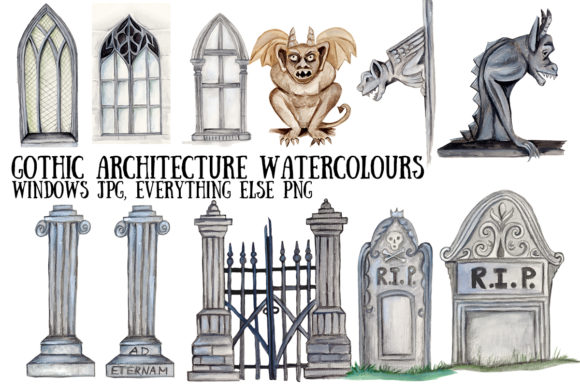
Finally, pay close attention to the files included in the set. The instruction file for using the font on darker backgrounds is a valuable resource—don’t skip it. Understanding how the watercolour texture interacts with different background colors will save you time and ensure the best possible result. The availability of both JPG and PNG files for different elements (like the windows versus the gargoyles) offers flexibility, allowing you to use the architectural assets as standalone design elements in your compositions.
Watercolour Gothic Architecture is more than just a creative font; it’s a complete design asset. By understanding its unique blend of structured form and artistic texture, you can use it to inject a powerful, memorable personality into your branding, marketing, and personal creative projects, ensuring your work stands out with depth and character.